Lower Back Pain: Gynecological Causes Worth Knowing
October 17, 2026
Dr. Himabindu
0 Comments
Lower Back Pain: Gynecological Causes Worth Knowing
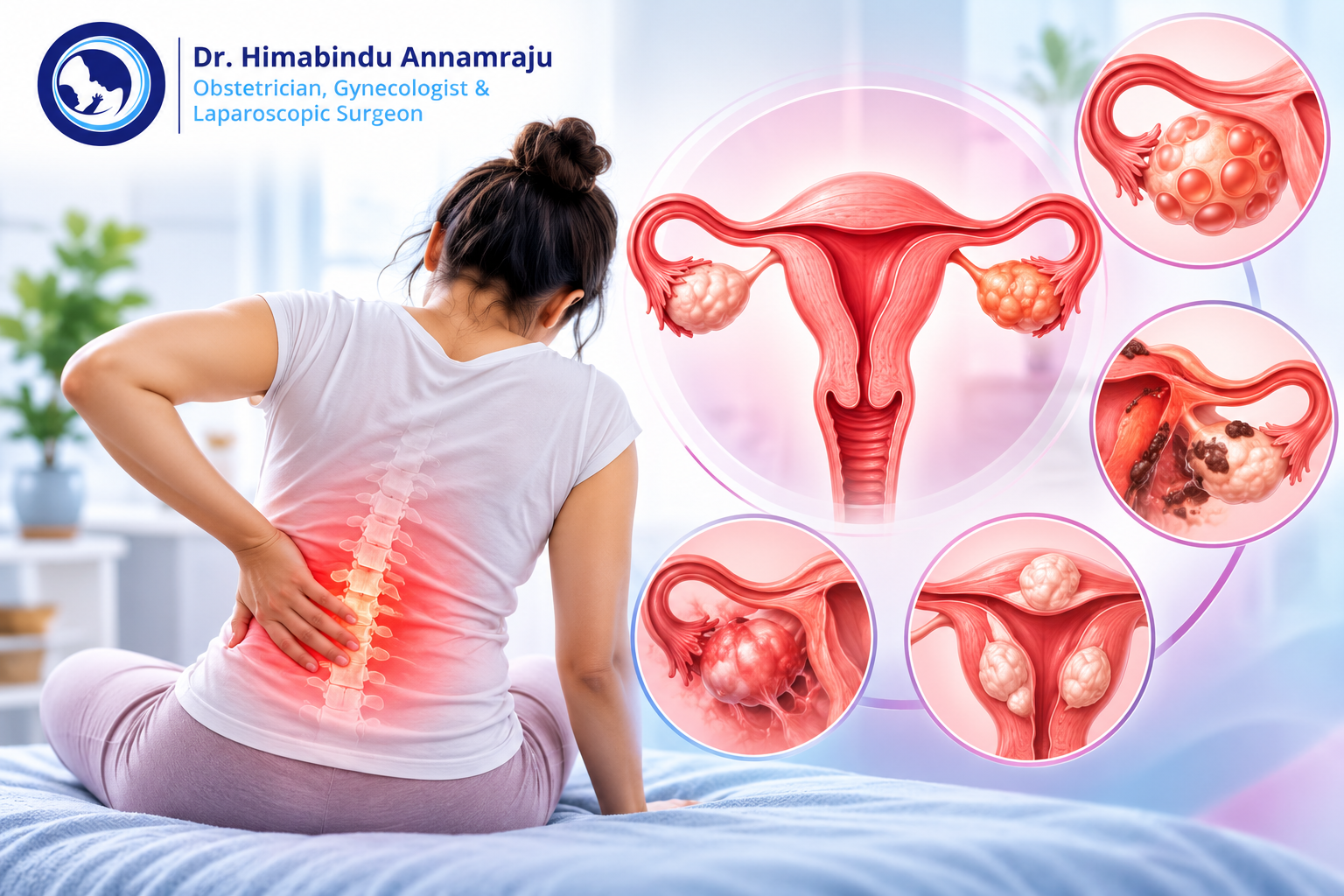
Gynecological causes of lower back pain: You’ve tried the stretches, the better chair, the heating pad. Still, that dull ache low in your back keeps returning, and oddly, it seems to follow your calendar. That timing is a clue. The uterus, ovaries, and surrounding tissue share nerve pathways with the lower back, so pelvic trouble can show up as pain you’d rather think is muscular. Doctors call it referred pain, and it’s an easy one to misread.
Quick self-check: Your back pain may deserve a gynecological look if —
It flares or worsens around your period, or at mid-cycle
It comes with heavy bleeding, painful sex, or pain when using the bathroom
It sits alongside a feeling of pelvic pressure or fullness, sometimes on one side
Rest, stretching, and over-the-counter back remedies haven’t made a lasting difference
Gynecological causes of lower back pain
The Everyday Culprit: Period Cramps
Start with the most common explanation. During a period, the uterus contracts to shed its lining, and hormone-like chemicals called prostaglandins intensify those contractions. Healthline notes that the resulting pain can radiate into the lower back and down the legs. That’s normal for many people. The warning sign is pain severe enough to disrupt your daily life, because it may point to something underneath, what doctors call secondary dysmenorrhea.
The Conditions Hiding Behind the Ache
Endometriosis. Tissue similar to the uterine lining grows outside the uterus. The NHS lists pain in the lower tummy and back among its symptoms, alongside severe period pain, pain during or after sex, and fatigue. It’s also notoriously slow to diagnose, partly because its symptoms overlap with fibroids, pelvic inflammatory disease, and irritable bowel syndrome.
Uterine fibroids. These noncancerous growths often cause no symptoms at all. When they do, Mayo Clinic lists backache among them, along with heavy or prolonged periods, pelvic pressure, frequent urination, and constipation. Larger or more numerous fibroids tend to cause more trouble.
Adenomyosis. Here the uterine lining grows into the muscular wall of the uterus. Mayo Clinic includes it among the reproductive-organ causes of pelvic pain, and Healthline names it as a condition linked with severe period-related back pain.
Ovarian cysts. Most are harmless and fade on their own, but Cleveland Clinic notes that larger ones can cause a dull ache in the back, pelvic pain, and a sense of fullness on one side.
Pelvic inflammatory disease (PID). This is an infection of the uterus, tubes, or ovaries, usually following an untreated sexually transmitted infection. Healthline lists it among the conditions behind painful periods and back pain. Harvard Health stresses the stakes: PID can leave scarring that blocks the fallopian tubes, raising the risk of infertility and ectopic pregnancy. Its symptoms can also be mild or absent, which is why people sometimes don’t realize they have it.
Know Your Red Flags
Reflect for a moment: If your pain suddenly turned sharp tomorrow, would you know whether to wait it out or head to the emergency room?
Some situations shouldn’t wait. Mayo Clinic advises immediate care for sudden, severe pelvic pain. Cleveland Clinic specifically flags the following with ovarian cysts: severe abdominal pain with vomiting or fever, dizziness or fainting, rapid breathing, and cold, clammy skin. These can signal a ruptured cyst, or torsion, where the ovary twists and loses its blood supply. Pain with pregnancy or a possible pregnancy also needs prompt evaluation, since ectopic pregnancy is among the pelvic pain causes Mayo Clinic lists.
What Actually Helps
Treatment depends entirely on the cause, which is why a diagnosis matters more than a stronger painkiller.
For period-related pain: NSAIDs such as ibuprofen reduce prostaglandin production, and hormonal birth control can also ease symptoms. Heat, massage, and gentle movement help too.
For endometriosis: the NHS describes painkillers and hormonal treatments first, with surgery considered if those fail or fertility is affected. There’s no cure, but symptoms can be managed.
For ovarian cysts: many are simply monitored with follow-up ultrasounds, while hormonal contraceptives can help prevent some from returning. Surgery is considered for cysts that cause symptoms or keep growing.
For PID: antibiotics are the foundation, typically for 10 to 14 days, and Harvard Health emphasizes finishing the entire course even once you feel better.
Diagnosis usually starts with a pelvic exam and an ultrasound, with further imaging or laparoscopy if needed.
The Bottom Line
Back pain that tracks your cycle, arrives with other pelvic symptoms, or ignores every orthopedic fix isn’t “just something women live with.” It’s information. Writing down when the pain hits, how it relates to your period, and what else travels with it can make an appointment far more productive. Persistent, worsening, or life-limiting pain deserves a conversation with a gynecologist, not another month of guessing.
One question to bring to your doctor: Could this back pain be coming from my pelvis, and what tests would help us find out?
Leave a Comment