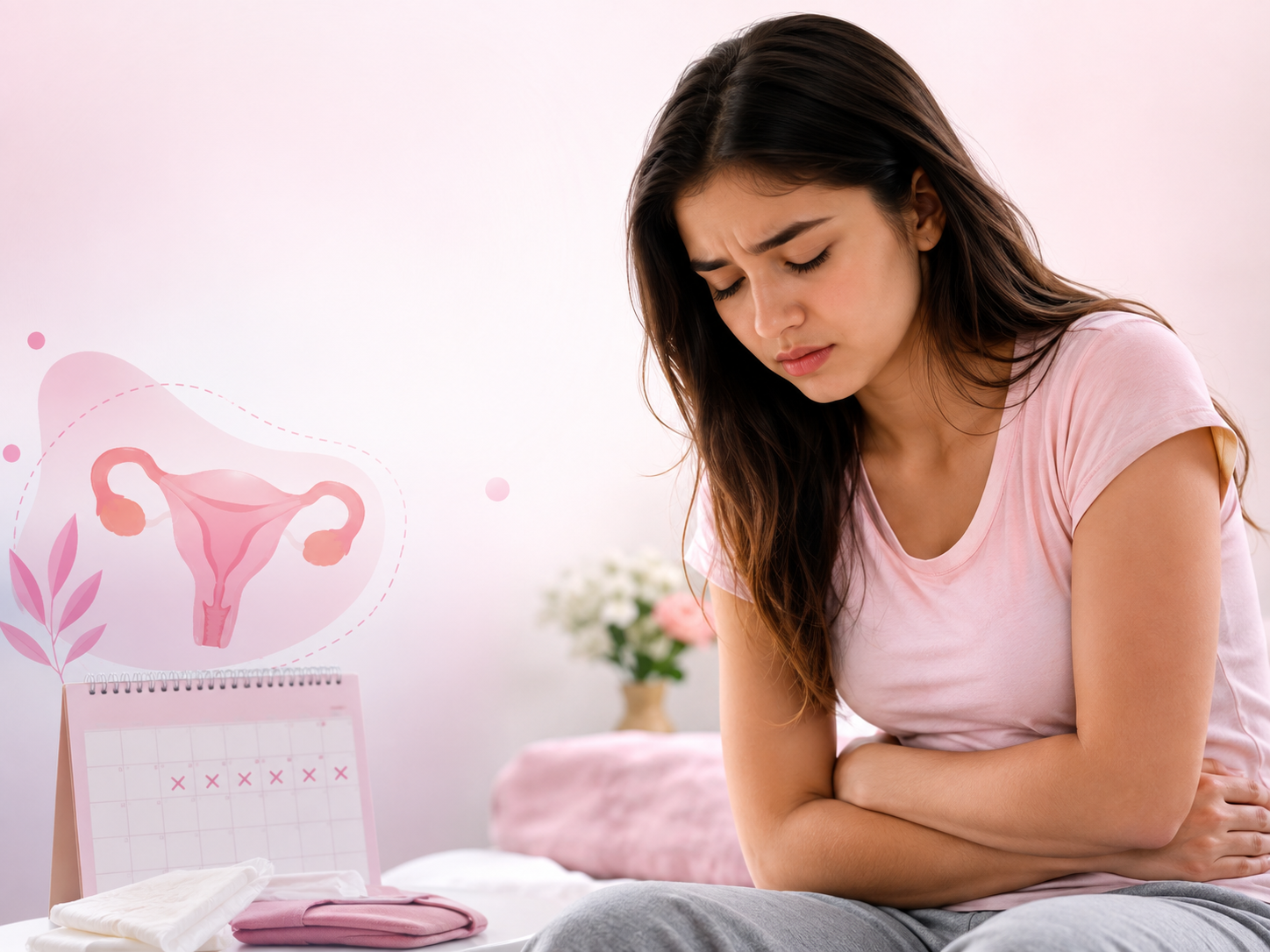
For most girls, the first few years after their first period are genuinely unpredictable — cycles that arrive early, late, or seem to skip a month altogether. That unpredictability often causes real worry for parents, even though it’s usually a normal part of a still-maturing reproductive system. The harder — and more useful — question isn’t “is this irregular,” but “is this the expected kind of irregular, or a pattern that needs medical attention?” ACOG has specifically recommended that clinicians treat the menstrual cycle as a vital sign in adolescent care, precisely because irregular patterns can be an early window into a girl’s broader health.
Irregular periods in young girls – A quick self-check
Has it been less than two years since her first period? (Irregularity here is expected and usually not a concern.)
Has she gone more than 90 days between periods, even after that initial adjustment window?
Is she missing periods alongside noticeable weight changes, intense exercise, or signs of unusual stress?
Has she developed excess facial or body hair, or persistent acne, alongside the irregular cycles?
These questions help separate ordinary adolescent variation from a pattern that genuinely warrants an evaluation.
Why the First Two Years Are Naturally Unpredictable
In early adolescence, the hypothalamic-pituitary-ovarian axis — the hormonal communication system that regulates ovulation — is still maturing. This commonly leads to anovulatory cycles, meaning an egg isn’t released even though bleeding occurs. It’s genuinely common, and it’s the single biggest reason a young girl’s periods can vary widely in the first couple of years without indicating anything is wrong.
When Irregularity Points to Something More
Polycystic ovary syndrome (PCOS) is one of the most common underlying causes once irregularity persists beyond the expected adjustment period — this hormonal condition often first appears in adolescence and, alongside irregular cycles, frequently comes with acne or excess hair growth as related signs. Because these symptoms tend to cluster together, a doctor evaluating one will often ask about the others.
Thyroid disease is another well-documented driver — both an underactive and overactive thyroid can disrupt cycle regularity, sometimes years before other symptoms become obvious.
Significant stress or over-exercise can suppress the hormonal signals that regulate the cycle. A 2025 study of adolescent girls found that academic stress specifically was linked to worsened menstrual irregularity and increased painful periods — a reminder that emotional and academic pressures have a measurable physical effect, not just a psychological one.
Eating disorders or inadequate energy intake, including the pattern sometimes called relative energy deficiency in sport, can suppress the same hormonal axis and lead to missed or irregular periods — a pattern clinicians take seriously precisely because it can be an early, visible sign of a much bigger underlying issue.
Bleeding disorders are a less commonly discussed but clinically significant cause. Research indicates that among adolescents hospitalized for heavy menstrual bleeding, roughly a third have an underlying bleeding disorder such as von Willebrand disease — which is why heavy or prolonged irregular bleeding is evaluated rather than assumed to be purely hormonal.
Certain medications, and rarely other endocrine or structural causes, round out the list of possibilities a doctor will consider during a full evaluation.
Reflect for a moment: Has the family talked openly about what counts as a “normal” period, or is this something being figured out quietly and alone? ACOG has specifically noted that adolescents often lack clear information about menstruation and may feel uneasy bringing up concerns — which is part of why open, low-pressure conversations at home make such a difference in catching a genuine issue early.
When to See a doctor
Medical evaluation is generally recommended if a girl hasn’t had her first period by age 15, if periods haven’t become reasonably regular within about three years of starting, if more than three months pass between cycles beyond the initial adjustment period, or if bleeding is heavy enough to soak through protection or interfere with daily activities.
What Evaluation and Treatment Look Like
A doctor’s workup typically starts with a detailed history and growth chart review, along with basic tests — a pregnancy test, thyroid panel, and sometimes hormone levels — before considering more specific causes. Treatment is entirely dependent on what’s found: hormonal regulation for PCOS, thyroid medication when relevant, nutritional and psychological support for stress- or eating-related causes, or specific management for a diagnosed bleeding disorder.
The Bottom Line
Some irregularity after a first period is expected and rarely a cause for alarm. But a pattern that persists, worsens, or comes with other symptoms — excess hair growth, significant weight changes, heavy bleeding — warrants a conversation with a pediatrician or adolescent gynecologist, not just patience.
One thing worth doing this week: if you notice irregular periods in young girls, consider simply asking how she’s feeling about it — sometimes that’s the conversation that leads to catching something early.
Leave a Comment